

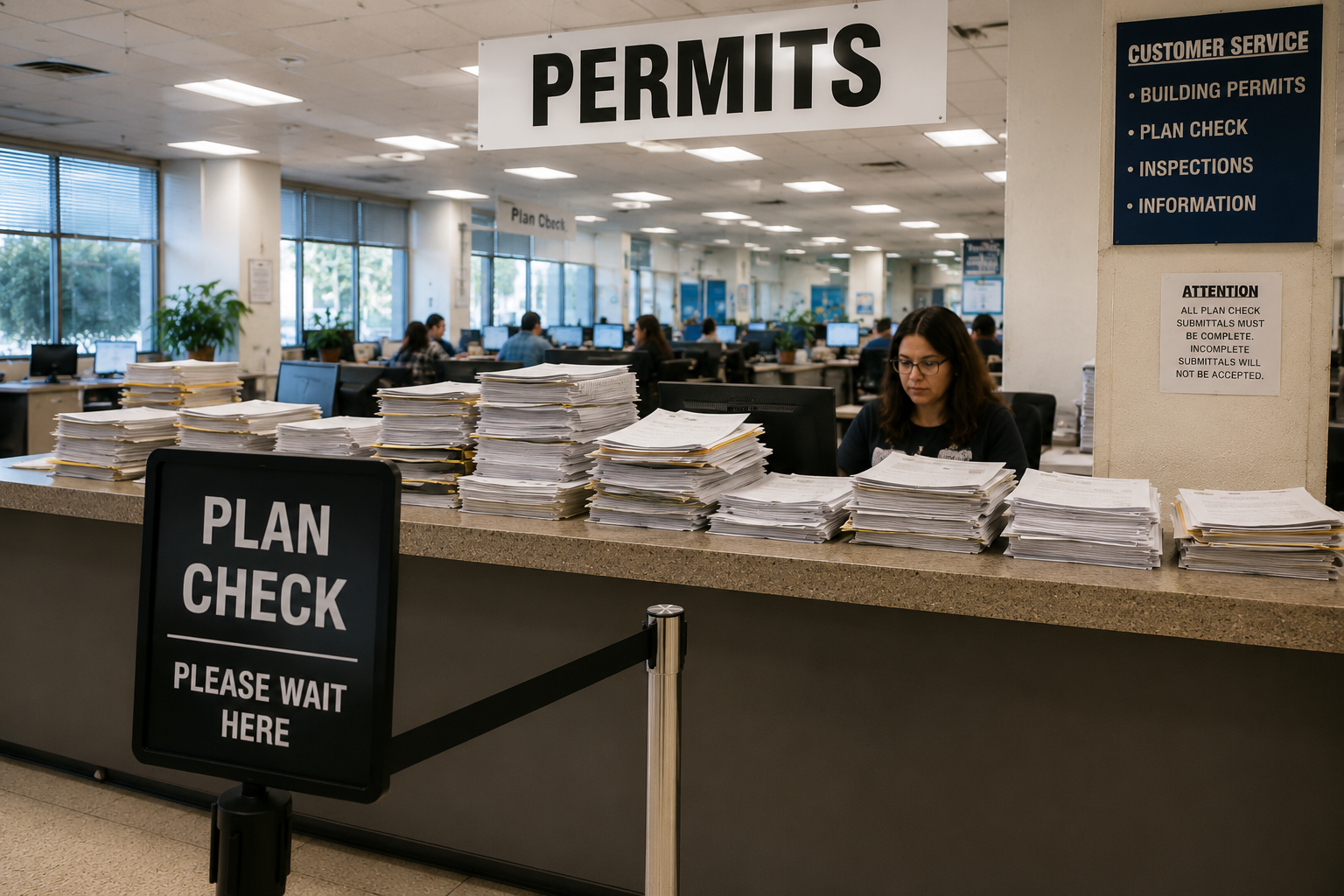
Most construction delays do not start on the job site.
They start long before construction even begins.
Plans get submitted.
Comments come back.
Revisions are requested.
Projects get pushed back.
Then the process starts over again.
For many builders, architects, developers, and business owners, this has simply become accepted as part of construction. But the reality is the delays add up quickly, especially when projects are waiting on approvals over issues that could have been identified earlier.
And it is not just affecting large developments.
Small businesses trying to open a location feel it.
Homeowners trying to build additions feel it.
Developers carrying projects month after month feel it.
Every extra round of revisions slows momentum and increases costs.
The Real Cost of Delays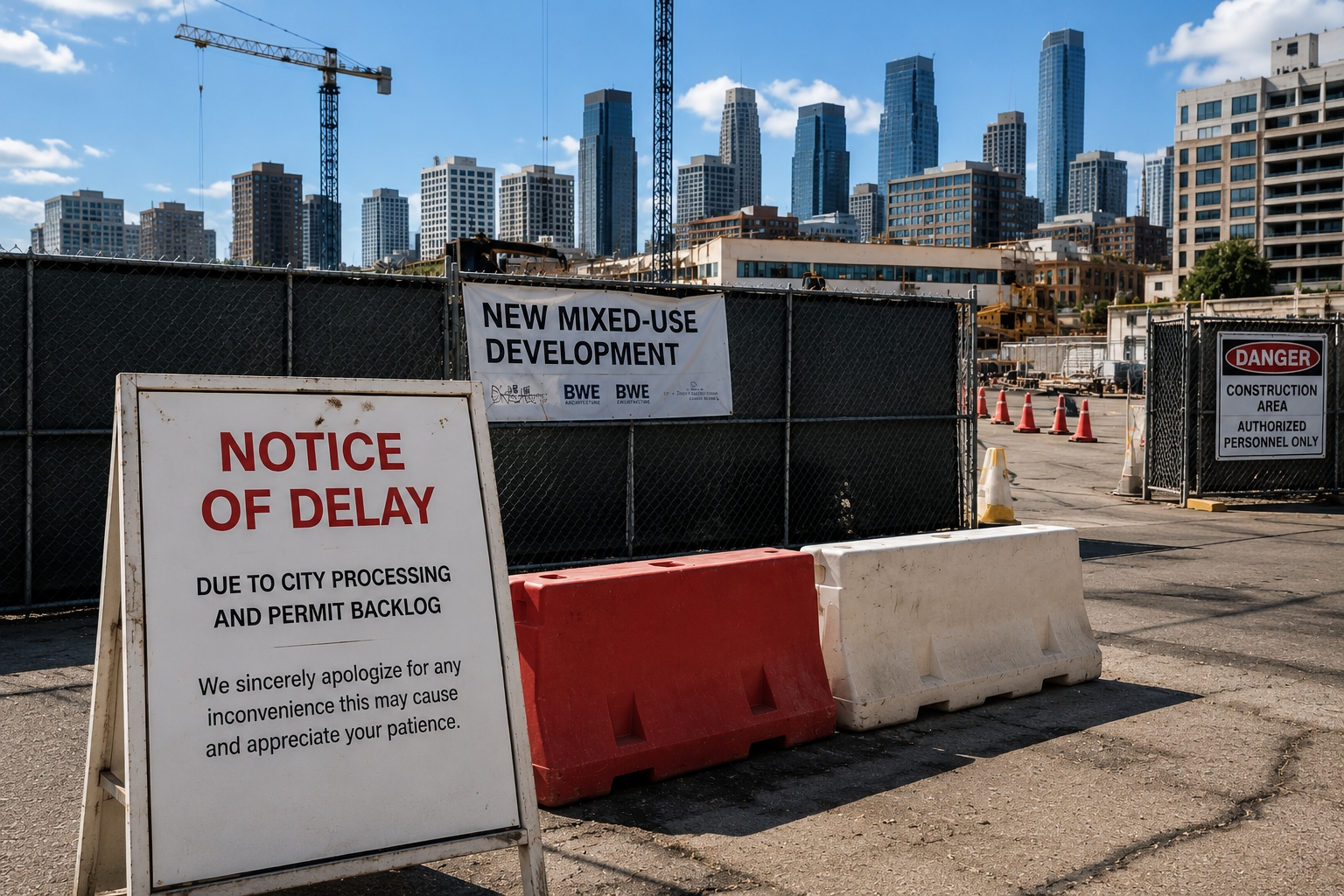
When projects sit in approval cycles too long, the impact spreads far beyond the permit itself.
Businesses delay openings.
Revenue gets pushed back.
Crews get rescheduled.
Housing inventory stays tied up longer than expected.
In some areas, projects are spending months moving through review cycles while cities struggle to keep up with volume and staffing demands.
At the same time, builders and architects are under pressure to move faster while dealing with increasingly detailed requirements and documentation.
That combination creates friction on both sides.
Most Problems Are Smaller Than People Think
One of the biggest misconceptions about permit delays is that they are usually caused by major design flaws.
In many cases, they are not.
It is often smaller inconsistencies and missing details that create the back-and-forth:
- conflicting information between sheets
- incomplete documentation
- missing notes
- coordination gaps
- details that trigger additional review comments
Individually, these issues may seem minor.
Collectively, they slow projects down significantly.
Why More Teams Are Looking at AI-Assisted Review
As approval timelines continue becoming a larger issue, more attention is being placed on ways to identify problems before plans are formally submitted.
Not to replace architects.
Not to replace municipal reviewers.
But to help reduce avoidable revision cycles earlier in the process.
That is where AI-assisted review is starting to become interesting.
Instead of waiting until plans are already inside the approval process, newer systems are helping teams review documentation more thoroughly upfront and identify issues that could create delays later.
The goal is simple:
- cleaner submissions
- fewer revisions
- less back-and-forth
- faster approvals
A Shift Happening in the Industry
One company working in this space is 2Build AI through its PlanSmart platform.
What makes the approach interesting is the focus on reviewing plans before submission rather than simply managing paperwork after the process begins.
The platform is designed to help identify inconsistencies, missing details, and other issues that commonly lead to revisions and delays during review.
As more cities and development teams look for ways to reduce bottlenecks, tools focused on earlier issue detection may become an increasingly important part of the conversation.
The permitting process is probably never going to be perfect.
But reducing avoidable delays before plans ever reach review could make a meaningful difference for cities, builders, and business owners trying to move projects forward.
Right now, too many projects are losing time in preventable revision cycles.
That is exactly the type of problem smarter pre-submission review is trying to solve.
If your team is dealing with repeated permit delays, stalled approvals, or constant resubmittals, it may be worth taking a closer look at what companies like 2Build AI and PlanSmart are building in this space.
👉 Learn more at https://plansmart.2build.ai/