
Let’s get this out of the way: trust in healthcare information is fractured. Americans don’t know who to believe, and the data proves it.
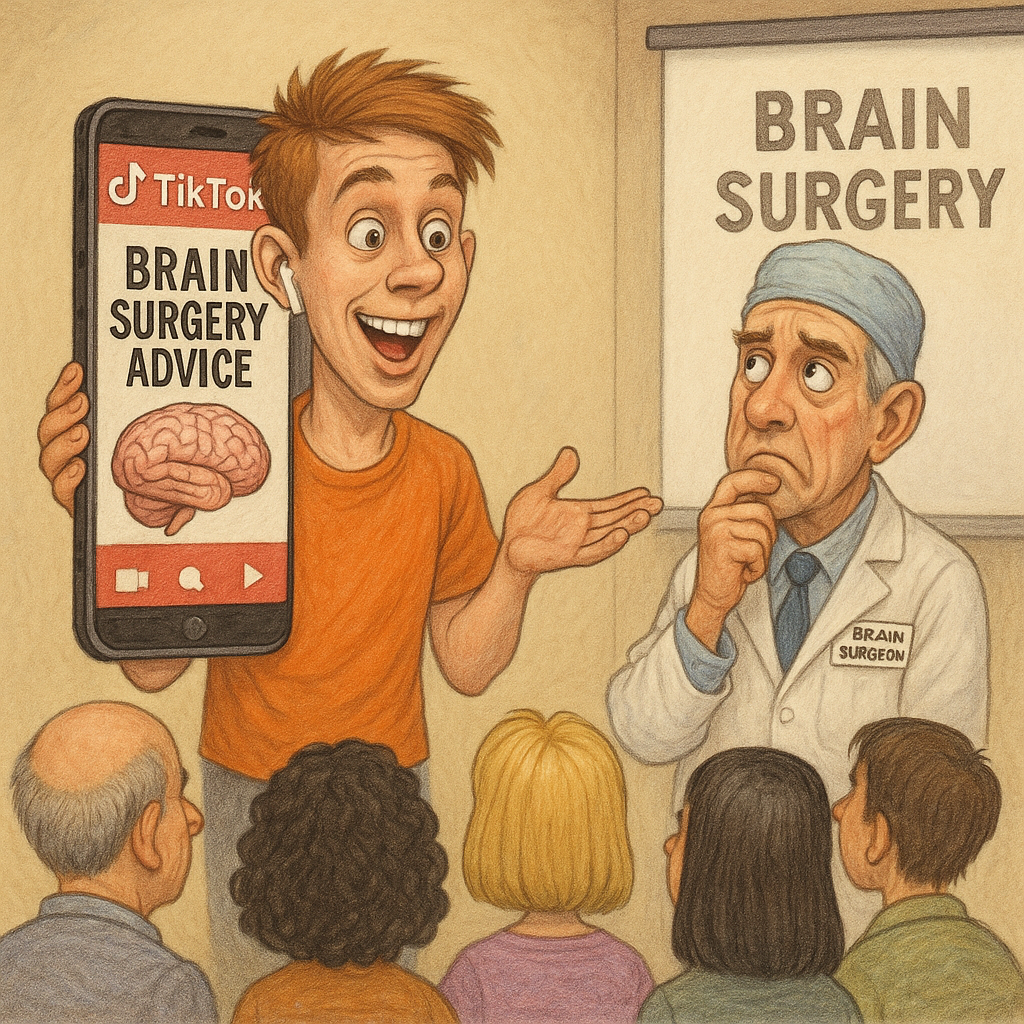
According to a July 2025 KFF Health Tracking Poll, 40% of US adults say they find most or some health information on TikTok trustworthy. Read that again. Not the CDC. Not Congress. Not even the President. TikTok. That’s the highest rating among all major platforms.
Meanwhile, Ipsos and Axios found that the majority of adults don’t trust the government at all when it comes to healthcare guidance, not Congress, not the President, not even the sitting HHS Secretary, Robert F. Kennedy Jr. If consumers don’t trust the people writing the policies, where do they turn?
You already know the answer: online. And increasingly, that means social media and AI search.
The Rise of Social and AI as Healthcare Gatekeepers
Menlo Ventures’ April 2025 survey adds more fuel to the fire:
- 14% of US adults use AI to research healthcare questions.
- 11% use AI to navigate healthcare in general.
Those numbers might sound small, but remember, we’re talking about healthcare. This isn’t ordering sneakers or scrolling recipes. This is people asking ChatGPT, Claude, or Perplexity if that mole looks suspicious or whether their cough is serious. When nearly one in seven adults is already relying on AI, the slope only gets steeper from here.
At the same time, TikTok and YouTube are becoming the new waiting rooms. They’re where people go first for information, community, and reassurance. Which means if you’re a health brand, or any brand adjacent to health, you’ve got a decision to make: either show up where your audience is searching, or risk being invisible when it matters most.
Trust Is Fragile, But Influence Is Real
Here’s the paradox: consumers say they don’t trust government health officials, but they’ll take advice from a nurse on TikTok or a fitness creator on YouTube. That’s not irrational, it’s human. People trust people. They trust faces, stories, and real-life experiences.
But that trust is fragile. The same platform that elevates a credible doctor can just as easily amplify a quack selling snake oil. Which is why health brands can’t treat social media as a “maybe” channel anymore. It’s the front line of perception, and if you’re not careful about who you partner with, your credibility can disappear overnight.
The strategy here isn’t rocket science:
- Work with credible creators. That doesn’t always mean influencers with millions of followers. A local nurse with 20,000 engaged viewers might move the needle more than a celebrity doctor with a massive but disengaged audience.
- Blend your social content with AI optimization. If people are searching health questions through AI tools, your content needs to be formatted, tagged, and distributed in a way that makes it discoverable. AI doesn’t pull from thin air, it pulls from what’s already out there. If your content isn’t structured to be found, you’re invisible.
The New Marketing Playbook for Health Brands
If you’re in healthcare marketing, or any industry where trust is currency, the playbook has shifted. Here’s where to focus:
- Social First, Search Always
Your audience is spending time on TikTok and YouTube, so your brand needs a voice there. But don’t just churn out “content.” Shape it around the real questions people are asking, then ensure it’s formatted in a way that AI search tools can pick up and deliver. - Credibility Through Association
Credibility isn’t built by shouting louder, it’s borrowed through trust. Partner with creators who already hold the trust of their communities. Think partnerships, not ads. Integration, not interruption. - Think Like a Consumer, Not a Regulator
People aren’t looking for policy memos, they want plain language, quick takeaways, and guidance they can apply now. Translate complex health information into clear, actionable advice. If your brand can do that, you’ll win attention and trust where institutions have failed. - Prepare for the AI Layer
AI search is not optional, it’s happening. The question is whether your content will be the one surfaced when consumers ask. That means optimizing for AI the same way we optimized for Google in the early 2000s. This is the next search frontier, and early adopters will own the real estate.
The Bottom Line
Consumers don’t trust Washington. They don’t trust politicians. Increasingly, they don’t trust traditional institutions at all. What they do trust, at least for now, are platforms like TikTok and YouTube, and the rising influence of AI search.
For health brands, the opportunity is massive, but so is the risk. Play it wrong, and you look like another tone-deaf institution. Play it right, and you become the credible voice people are desperate to hear.
At Gizoom, this is the kind of strategic shift we help companies navigate. It’s not about chasing trends for the sake of it, it’s about understanding where the audience actually is, how they’re searching for answers, and how your brand can show up with credibility intact.
Trust may be fragile, but influence is up for grabs. The question is: will your brand be the one they find when they go looking?
If you’re evaluating how trust, social platforms, and AI search will shape your market, a focused strategy session can help clarify the path forward. Schedule a call with Gizoom to identify the opportunities most relevant to your business.